Health & milestones
A daily weight check, a quick body scan, and a calm eye on their behavior will tell you everything you need to know. Healthy kittens gain weight steadily and feel warm, plump, and pink.
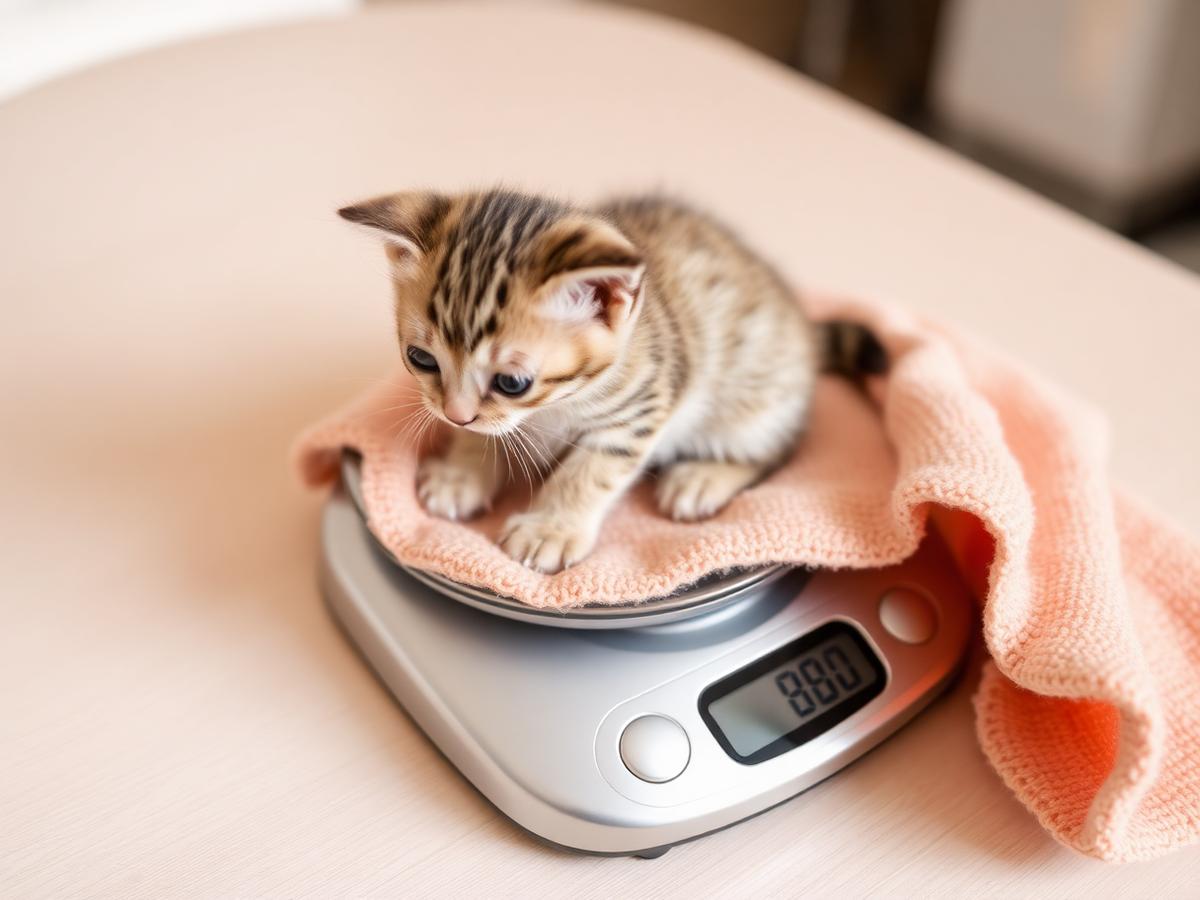
Weigh every day
Use a gram-accurate kitchen scale lined with a towel. Weigh at the same time each day, ideally before the first morning feed. Write it down.
- Expect 10–15 grams of gain per day in the first month.
- No gain for one day = watch closely.
- No gain for two days, or any weight loss = call your vet.
Developmental milestones
Eyes open
7–14 days. All kittens start with blue eyes.
Ears unfold
14–17 days. They can suddenly hear you.
First teeth
2–3 weeks. Tiny needle baby teeth.
Walking
3 weeks. Wobbly at first, then sturdy.
First solid food
4 weeks. Soupy gruel.
Play & pounce
4–5 weeks. Toys, wrestling, zoomies.
Fully weaned
7–8 weeks. Eating wet food only.
First vaccines
6–8 weeks. Talk to your vet about FVRCP.
Ready for adoption
8–12 weeks. Once eating, socialized, and healthy.
Vet visits & prevention
- First check-up: within a few days of finding them. Vet will check for parasites, fleas, hydration, and overall condition.
- Deworming: usually starts at 2 weeks with pyrantel pamoate, repeated every 2 weeks. Almost all orphan kittens have worms.
- Flea control: kitten-safe products only (e.g. Capstar over 2 lbs, or a flea comb and warm bath for tinies). Never use adult cat flea products on newborns — many are toxic.
- FVRCP vaccine: first dose at 6–8 weeks, boosters every 3–4 weeks until 16 weeks.
- Spay/neuter: typically at 8 weeks / 2 lbs through a shelter, or by 5 months through a private vet.
Daily health check
Each day, spend a minute looking at each kitten:
- Gums and tongue: bright pink. Pale or grey = emergency.
- Eyes: clear, no goop or crust.
- Nose: clean, slightly moist.
- Belly: round and soft, not bloated or hard.
- Bottom: clean and dry.
- Skin: tent test — pinch skin at the scruff; it should snap back instantly. Slow = dehydrated.
- Energy: rooting, kneading, crying for food are good. Quiet and still is not.
Fading kitten syndrome — act fast
A kitten that suddenly turns cold, limp, weak, or stops eating is in crisis. Warm them on your skin, rub a drop of Karo syrup or honey on the gums, and get to an emergency vet immediately. Hours matter.
Socialize gently from day one
Hold them, talk softly, expose them to gentle household sounds, and let them meet calm humans once their eyes open. Kittens handled often between 2 and 7 weeks become the most loving adult cats.