Chapter 4
Helping them go
Until about 3 weeks old, kittens can't pee or poop on their own. Their mother would normally lick them after every feed to stimulate it. Without her, that's your job — and it's easier than it sounds.
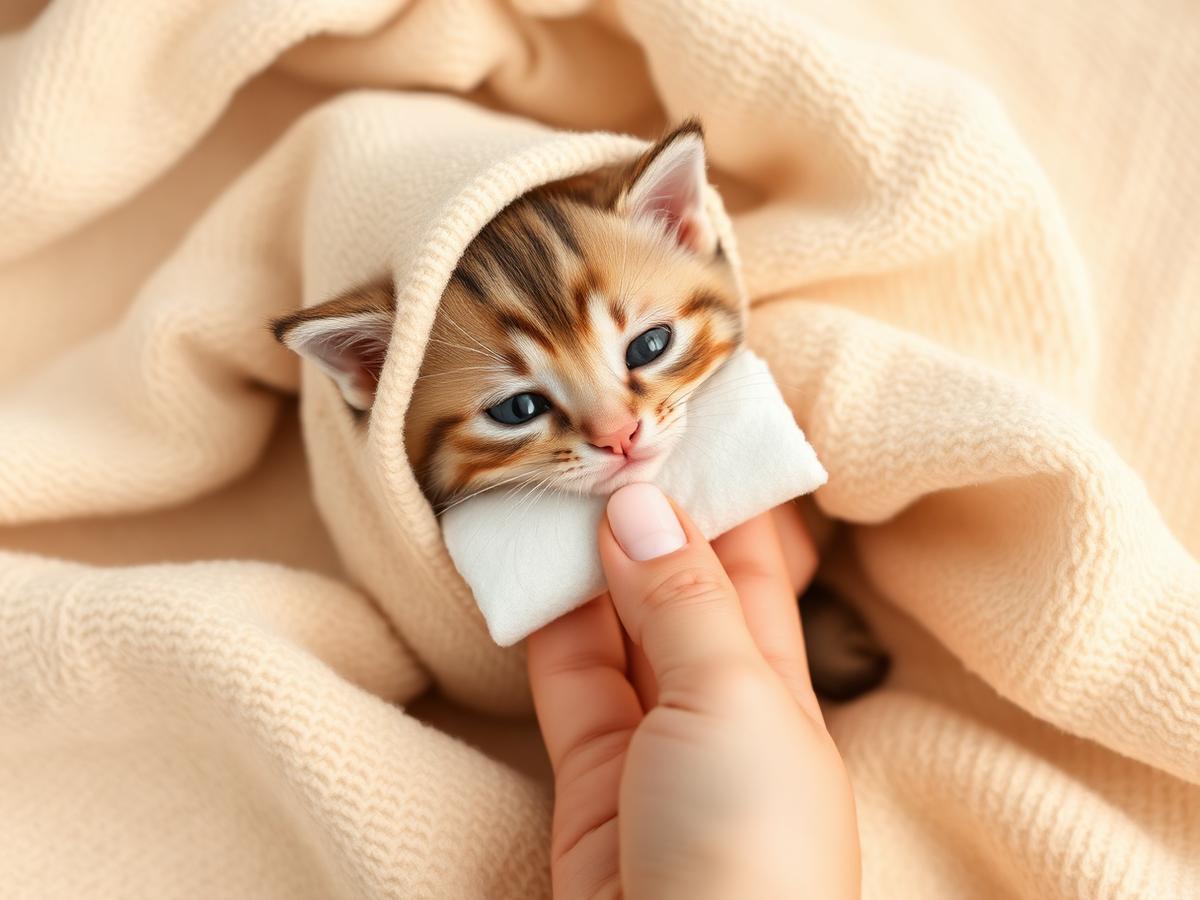
How to stimulate them
- After every feeding, dampen a cotton pad, soft cloth, or unscented baby wipe with warm water. It should feel warm on your wrist, not hot.
- Hold the kitten upright or belly-down on your lap, supporting their body.
- Gently rub the genital and bottom area in small, soft circles — the same rhythm a mother's tongue would use.
- Continue until they pee (usually within 30 seconds) and ideally poop. Pee is essential at every feed. Poop is normal once or twice a day.
- Wipe them clean, dry gently, and return them to the warm nest.
What's normal
- Pee: pale yellow, every feeding. Dark yellow means they need more fluids.
- Poop: mustard-yellow or tan, soft but formed, like toothpaste. Once a day is common; every other day can be okay if they seem comfortable.
- A gentle belly rub (in clockwise circles) can help if they're a bit backed up.
Litter box training (around 3–4 weeks)
- Use a low, shallow tray — a baking sheet or the bottom of a cardboard box works well.
- Fill with non-clumping litter only. Clumping litter is dangerous if ingested by kittens this small. Pelleted paper litter (Yesterday's News) is a great first choice.
- After feeds, place each kitten in the box and gently scratch their paws in the litter to show them the idea.
- Praise quietly when they use it. Most learn within a week.
When to worry
If a kitten hasn't peed in 12 hours, hasn't pooped in 2 days, has diarrhea, has bloody stool, or strains and cries — call a vet. Constipation and dehydration are serious in newborns.